The war of the enslaved against their enslavers [is] the only justifiable war in history. – Karl Marx, The Civil War in France
The journalist Max Blumental, who edits the GRAYZONE, posted a video of former US chairman of the joint chiefs Mark Milley cataloguing, in a maladroit effort to justify Israeli atrocities in Gaza, US campaigns in which civilians were slaughtered in numbers matching or exceeding the Israeli-engineered, US-arms-supplied, Washington-approved, genocide in Gaza.
“Before we all get self-righteous about what Israel is doing,” intoned Milley, we should remember that “we slaughtered people in massive numbers, innocent people…men, women, and children.”
“War is a terrible thing,” he added.
Ret. Gen. Mark Milley says the US has committed so many war crimes over the years, it has no right to criticize Israel's devastation of Gaza
Palantir CEO Alex Karp chimes in: "The peace activists are actually the war activists, and we're the peace activists."
Unlike Milley, I don’t condone the killing of innocent civilians, including those killed by Hamas.
But this invites the question: Which civilians are innocent and which are not? Anyone incapable of fighting—children, the aged, the ill—must be considered innocent. Civilians who take up arms and thus become combatants, are not innocent. In a war of oppressors against the oppressed, are civilians who knowingly participate in, benefit from, or approve of oppression, innocent? Is a settler innocent?
We might ask too about how the US and Israeli goals in war compare with those of the Palestinian resistance.
The US goal is to impose the will of the US economic elite on other people so that the global economic order remains tilted in favor of US investors, billionaires, and corporations. Today, the United States overtly prepares for a war of aggression against China, openly acknowledging the reason: Because the East Asian giant, by its size and rapid economic development, threatens to disrupt the US-at-the-top global economic order and topple the US corporate class from its commanding position at the apex.
The Israeli goal is to impose the will of the self-appointed leaders of an ethno-religious group, Jews, on Arabs in the Levant.
The goal of the Palestinian resistance, by contrast, is to liberate Palestinians from the ethno-religious oppression of a racist Zionism that is backed by Washington and which uses Israel as its instrument to pursue US economic and strategic goals in West Asia and North Africa against the interests of the local populations.
By his words, Milley implies that US and Israeli wars are just, and that the killing of civilians in these wars is therefore acceptable. By contrast, his words suggest that the armed action of the Palestinian resistance is unjust and that the killing of civilians in pursuit of liberation is therefore horrible, brutal, and vicious. Twelve hundred people killed in a Hamas attack is flagitious and intolerable in Milley’s view, but tens of thousands of people, mostly women and children, slaughtered in a demented, openly genocidal Israeli campaign, is, in Milley’s view, just the regrettable reality of war.
Milley defends the consequences of US and Israeli aggressions by describing war as horrible, brutal, and vicious. In Milley’s words, US pilots don’t drop bombs and Israeli soldiers don’t fire US-supplied artillery shells; instead, civilians are slaughtered in sickening numbers by an impersonal thing called war. On the other hand, Israeli civilians are killed by a very personal thing called Hamas.
Milley’s tacit assertion that US and Israeli wars are just—wars which are, au fond, motivated by goals of exploitation and oppression—speaks volumes about what the Washington elite believes, as does the retired general’s implied condemnation of the war for liberation that lies at the center of the Palestinian resistance; a war of the enslaved against their enslavers.
In the world of the US ruling class, when Hamas does it, killing civilians is horrible, wicked, and intolerable, but when the US and Israel do it—producing civilian corpses in numbers vastly greater than any Hamas could ever come close to even remotely matching—it’s just the inevitable, yes, terrible, but all the same, excusable, consequence of war.
In the US view, then, killing many civilians in an unjust war is perfectly alright, even if horrible. On the other hand, killing comparatively few civilians in a just war is intolerable.
Given that Milley, not alone in the US-Israeli establishment, is willing to tolerate civilian deaths in massive numbers as, what he characterizes as, the regrettable but acceptable consequence of war, one can only conclude that what really bothers him and his fellow worshippers of Mars in the service of economic and ethno-religious elites, is not the killing of Israeli civilians by Hamas on October 7, but the reality that the enslaved Palestinians rose against their Israeli enslavers.
Paris is trying to shut down the anti-genocide campaign of the French political party, la France insoumise, by criminalizing it as antisemitic, pro-terrorist, and pro-Hamas. Prosecutors are investigating a number of the statements made by party leaders, including this blandly factual description: “The armed offensive by Palestinian forces led by Hamas comes in a context of intensification of Israeli occupation policy in Gaza, the West Bank and East Jerusalem.” The alleged crime in the party’s statement is its description of the October 7 attacks as an armed offensive rather than presumably, as a vile, reprehensible act of terror; description in lieu of denunciation has become verboten; failure to endorse the moral evaluations of established authority will be punished.
France’s tradition of resistance to occupation lives on, it seems, only in la France insoumise, and not in the current government. The orientation of bien pensant France appears to be more faithful to the Vichy tradition of complicity with an occupier. Inasmuch as France deplores the right of the occupied to use violence to resist their occupation (as the French did against Nazi occupiers in World War II), it condones the Israeli occupation and apartheid of which the armed offensive of Hamas is but the response. Describing the Hamas attack as an armed offensive in no way condones the killing of unarmed civilians, or their abduction, or even points to the right of the occupied to use violence to end their occupation. All the same, the right does exist. In my opinion, the right is not an unlimited one; the oppressed haven’t the right to use violence in any way they please. But the use of violence by the oppressed against those who oppress them is just. Whoever acts to pacify the slave, or impedes those who arouse him against his oppression, aids the slave-master.
France, as well as Germany, claim that their respective roles in the Holocaust obligate their support for Israel as atonement for past sins. This rests on an invalid idea: That because the Germans visited a holocaust on the Jews who were living on land in Eastern Europe that Germany coveted, that Zionists should be supported in visiting a holocaust on the Palestinians who live on land Zionists covet. In other words, we will atone for our own crimes, say Paris and Bonn, by supporting the self-appointed leaders of the people we harmed to inflict the same harm upon another people. This isn’t atonement for a crime; it is the universalization of it; its redux.
French and German efforts to shut down support in their own countries for protests against Israeli apartheid and genocide, and efforts in the United States to punish students for participating in campus protests, as well as to produce legislation to gag critics of Israel by defining anti-Zionism as antisemitism, reveal a truth about free speech: it’s a myth. Free speech is tolerated, indeed, welcomed and boasted about, but only when it doesn’t challenge the established order, or does, but has limited reach. Speech which threatens to mobilize people against an order that favors those in power is almost always, and everywhere, prohibited, energetically discouraged, and punished. Often, verboten subjects are presented as that part of free speech that isn’t absolute, or as an abuse, where abuse, not expressed as such but implied all the same, means saying something that threatens to mobilize people against those who oppress and exploit. So it is that criticism of Zionism must be squelched by the enablers of Zionist crimes because too many people are rallying to oppose them; so it is that this speech must be calumniated as criminal and an abuse of the norms of free expression.
“One of Brown University’s major donors, the billionaire real estate mogul Barry Sternlicht” has “sharply criticized the school’s agreement to hold a board vote on cutting investments tied to Israel.” The decision is “unconscionable” he says, and he has “paused” donations to the school, as a means of discouraging further outbreaks of advocacy he and his fellow Zionists despise. Sternlicht has invoked a tu quoque (you, as well) defense of Israel’s genocidal conduct. The moneybag’s argument takes the following form: The United States has slaughtered many more people in war than Israel has. If the United States can engage in wanton slaughter, then so too can Israel. Moreover, he asks, where were the protests against the hundreds of thousands of civilians killed in wars in Syria, Afghanistan, and Iraq? Tu quoque arguments are logically invalid, and so I will address this aspect of Sternlicht’s argument no further. There were indeed protests against the wars he cites; perhaps the real-estate mogul was too busy accumulating his billions to notice. However, it must be conceded that protests against the wars that the United States visibly and directly led were not generally as large or sustained as the current broad grassroots campaign against Israel’s genocide. This might be because US officials in recent US wars, unlike Israeli officials, soldiers, and citizens in their current war on Gaza, never expressed the intention or desire to exterminate a people. But there may be another reason, too. Radicals can generally be expected to be as fervent in their opposition to US wars as those of Israel, but is this true of non-radicals? Are they more likely to see their own country than others as, au fond, morally decent?
The idea that the United States, Germany, France and other US allies are not themselves directly implicated in the horrors perpetrated by Israel against the Palestinians is another myth. The Wall Street Journal recently warned that an Israeli attack on Rafah could further impair Tel Aviv’s relationship with the United States government. Further impair? In what way has it been impaired at all? Washington recently approved $26 billion in Israeli military aid (on top of regular annual contributions of $3.8 billion), and remains indefatigable in pledging ironclad support, despite Israel’s enforcement of apartheid in Palestine and pursuit of genocide against the Palestinians, despite settler pogroms against Palestinians in the West Bank, and despite a policy of starvation, destruction, and extermination in Gaza. The idea that the US-Israeli relationship has been impaired by Israeli atrocities is a myth, conjured, it would seem, to shield US citizens from the reality that their government is as much implicated in apartheid and genocide as is its Zionist protege. To paraphrase the iconic Palestinian revolutionary, Leila Khaled, the United States is Israel, and Israel is the United States in Palestine. The notion that the Zionist State is tarnishing the moral standing of its US patron, and that the malignant conduct of Tel Aviv is trying Joe Biden’s patience, is a fairy-tale manufactured to exculpate Washington for its contribution to efforts to erase the Palestinians.
Washington stands behind the war on Palestinians as much as it stood behind wars on Iraqis, Afghans, and Syrians. It ought to be opposed, criticized, and demonstrated against in measures equal to the opposition and criticism of Israel. Genocide Joe is as apt an epithet as Genocide Bibi, just as much as Genocide USA (and Genocide Germany, France, Britain, Canada, etc.) is as apt an epithet as Genocide Israel.
“French President Emmanuel Macron repeated last week that he doesn’t exclude sending troops to Ukraine, and U.K. Foreign Secretary David Cameron said Kyiv’s forces will be able to use British long-range weapons to strike targets inside Russia.” This prompted “Russia to hold drills simulating the use of battlefield nuclear weapons.” “Dmitry Medvedev, the deputy head of Russia’s Security Council said that the comments by Macron and Cameron risked pushing the nuclear-armed world toward a ‘global catastrophe.’”
The words of the French president and UK foreign secretary are madness. These two bedlamites are flirting with an escalation of the Ukraine conflict to World War III. There is no military solution to the struggle over Ukraine, of the United States and its NATO instrument on the one side, and Russia on the other. The only outcomes are (i) a permanent war of attrition, in which the United States fights Russia to the last Ukrainian, an option which has some advantages for the US ruling class, to be sure; it weakens a geopolitical rival, Russia, at no expense in US lives; keeps Europe securely under US control via a beefed-up NATO; and maintains pressure on the Europeans to buy US military equipment to underwrite interoperability with US forces, to the benefit of US arms industry shareholders; (ii) escalation to World War III; so long as the war persists, and so long as lunatics like Macron and Cameron are prepared to risk the existence of humanity by elevating the level of threat to Russia, the total annihilation of humanity in a nuclear show-down between great powers has a probability above zero; (iii) a political solution. Russia is strong enough militarily that its ability to enforce a sphere of influence in parts of Ukraine, if not the outright absorption of a large fraction of the country, is insuperable. There is nothing the United States and its European clients can do to stop it. They can finance an indefinite Ukrainian war against Russia, but the chances that Kyiv is ever going to recover the Ukrainian territory Russia has already ingurgitated appear to be very small. It would seem highly probable that Washington recognizes that the loss of Ukrainian territory to Russia is an irreversible fact, but that this is of little moment, since Washington is willing to settle for an achievable goal, namely, weakening its Russian rival by keeping it bogged down in a Ukrainian quagmire.
The danger, so far as a political solution continues to be eschewed, is that the world will end and humanity with it as foolish and dangerously bold politicians gamble that they can stare down a nuclear-armed opponent and make him yield. Maybe they can, but is it a chance worth taking?
Yesterday, the House of Representatives voted to pass the Antisemitism Awareness Act, which would require the Education Department to use the International Holocaust Remembrance Alliance’s working definition of antisemitism when enforcing federal antidiscrimination laws.
The IHRA defines the following as an example of “antisemitism in public life”: “Denying the Jewish people their right to self-determination, e.g., by claiming that the existence of a State of Israel is a racist endeavor.”
In connection with this, it should be noted that, “the Jewish people” do not have a right to self-determination senior to, or negating, the right of the Palestinian people to self-determination on the historic territory of the Palestinians.
Israel, exercising de facto control over the traditional territory of the Palestinians from the Jordan River to the Mediterranean Sea, by the force of arms largely supplied by the United States and Germany, is an apartheid, racist, state, which enforces Jewish supremacy over the native Palestinian population. Amnesty International, Human Rights Watch, B’Tselem, and other human rights organization have characterized Israel as an apartheid state.
Political Zionism, which elevates the interests of Jewish settlers above those of Palestinian natives in historic Palestine, is a racist doctrine.
Political Zionism, Israel, and the settler colonial project in the Levant, are the instruments of great powers, and most especially, since 1967, the United States. They could not exist without Washington’s ironclad support. In return, they help keep Arab and Muslim nationalist forces in check in order to safeguard US domination of West Asia and its petroleum resources and key energy supply routes.
The IHRA does not deny that the State of Israel is a racist endeavor; it only seeks to discredit those who say it is, by labelling them antisemites.
The IHRA is far from a neutral organization. It is a political animal which represents the combined interests of the United States and its key allies, and their client, Israel, whose aim it is to police criticism of Israel and the US-backed settler colonial project in the Levant under the guise of combatting anti-Jewish racism and promoting remembrance of the Holocaust.
The IHRA and its supporters are keen to foster remembrance of the anti-Jewish genocide and are equally keen to suppress opposition to what the International Criminal Court has judged to be the plausible possibility of an Israeli-perpetrated genocide in progress against the Palestinians.
Whether the Israeli military assault on Palestinians in Gaza, on civilian infrastructure, and efforts to starve the population, along with the pogroms against Palestinians in the West Bank, rise to the ICJ definition of genocide, it is clear that key Israeli decision-makers and Israeli soldiers have expressed genocidal intent and that the Israeli military campaign in Gaza is undeniably one of massacre.
The IHRA lists many examples of what it says is antisemitism but the list is open; the organization says there are other examples, which it does not enumerate. This allows the definition to expand in order to traduce critics of Israel and political Zionism’s racist settler colonial project as circumstances demand. Doubtlessly, the IHRA definition will be used, and probably already has been, to define the designation of Israel as a state plausibly carrying out a genocide as an act of anti-Jewish hatred.
Apart from the problem of the IHRA definition’s manifest political intent to intimidate critics of Israel into silence, is its logical flaw. The definition illegitimately conflates Jews and Judaism with Israelis and Israel—not all jews are Israeli, and many Jews reject any identification with the state—so that criticism of the Zionist project is dishonestly equated to hatred of Jews. The description of Germany from 1933 to 1945 as a racist, imperialist, state, bent on genocide, hardly amounts to hate speech against Germans. By the same principle, the description of Israel as a racist endeavor, carrying out a plausible genocide against a people it has been trying to erase since 1947, is not hate speech against Jews; it is criticism of Israel and its racist project.
Israeli officials employ the legerdemain favored by the IHRA to shelter the state from criticism and opposition. Israel’s prime minister, Benjamin Netanyahu, for example, is apt to defend every Israeli crime by labelling opposition to them as an assault on “the world’s one and only Jewish state”, as if criticizing Israel for a plausible genocide, or its apartheid, amounts to criticism of Jews as a people. Zionists would dearly love to be the spokespersons of the Jewish people, but the position is a self-appointed one, and the United States and Israel’s other patrons participate in the deception. Just as the Nazis appointed themselves as spokespeople for the Germans, over the opposition, it might be noted, of many million Germans, so too do the Israeli clients of the United States affect to be the spokespeople for the Jews (over the opposition of many Jews.).
Sadly, the frequent abuse of the word “antisemitism” for the political gain of Israel and its great power patrons, debases efforts to combat genuine anti-Jewish hatred. Stretch a definition too far, and it becomes meaningless.
It is astonishing that US journalists can continue to implicitly accept that the conduct of their own government is guided by human rights concerns, when even a cursory knowledge of the US record in foreign affairs unequivocally refutes this notion. To believe Washington conducts itself on the world stage with the promotion of human rights as a significant goal represents an instance of the epistemology of ignorance—failing to see glaring evidence that refutes a dearly-held view even though the evidence is staring you in the face.
An example of how it is that many US journalists are committed to a religious-like faith in their country’s imagined devotion to human rights can be found in a March 25, 2024, Wall Street Journal article, “A Ticking Time Bomb: In Syrian Camps, Fears of an Islamic State Revival,” by Gordon Lubold and Michael R. Gordon.
The article concerns a network of prisons, including the Al-Hol refugee camp, run by the Syrian Defense Forces (SDF) in the US occupation zone in Syria.
The phrase “US occupation zone in Syria,” and the idea that the United States is occupying part of a foreign country, are absent from public discourse, and therefore demand an explanation. The United States admits to maintaining 900 troops in northeast Syria, backed by 2,500 others in neighboring Iraq, but at the same time acknowledges that the number is only “a construct” and that there are uncounted US forces in Syria, whose number it refuses to disclose. The uncounted personnel include contractors (mercenaries) and special forces. One recent Wall Street Journal report disclosed that there are “about 4,500 American troops and civilians…deployed at bases around the region.” The Congressional Research Service, the research arm of the US Congress, says there are “6,770 Defense Department contractors …. spread between Syria and Iraq.” The US military presence in Syria appears therefore to be more significant than 900 troops. The reason for keeping a US military presence in Syria is ostensibly to suppress a revival of Islamic State, and, perhaps so, but also to deny Damascus access to the oil-producing region and its revenues. The US presence in Syria also serves to help the US government impede the flow of arms from Tehran through Syria to Hezbollah in Lebanon.
US forces may play a useful role in suppressing an ISIS revival, but they were never invited into the country by the Syrian government. Their presence is opposed by Damascus, and represents a flagrant violation of international law. We could even say it is an affront to the vaunted rules-based international order, were the phrase not simply a reference to whatever arbitrary set of rules Washington, at its own discretion, defines for itself and others, to suit its momentary interests. There is no rules-based international order apart from international law and the United States is flouting it in Syria and elsewhere. The fact that Washington has invented a new phrase to replace the term ‘international law’ is nothing more than a transparent attempt to make ius gentium equivalent to US diktat.
All to say that the United States is occupying a part of Syria—illegally, despite its dishonest posturing as the paladin of international legal standards. It is helped by a Kurdish military, the Syrian Democratic Forces, which the late journalist Robert Fisk called neither Syrian (it is led by Turkish Kurds in the main) or democratic (it has imposed its rule on the Arab population per vim as a contractor to the US occupation.) The SDF is to the Arabs in Syria what Israel is to the Arabs in historic Palestine—a client of the United States, which has rented itself out to Washington as an instrument of US foreign policy in exchange for support in setting up and maintaining a homeland in someone else’s country.
By the way, the United States isn’t the only foreign power to carve out its own zone in Syria. Israel (the Golan Heights) and Turkey (northern Syria) have done the same. Meanwhile, Russia and Iran have their own military presences in the country, though, unlike the United States and Turkey, are in Syria legally, at the request of the government in Damascus.
During its war on ISIS, the United States captured thousands of ISIS fighters, and rounded up their families, which are now held in a network of prisons in northeast Syria. The prisons and camps are run by the SDF under US droit de regard.
In writing their article, Lubold and Gordon were concerned to answer the question: What should become of these camps and the people within them? The “daunting question” they wrote, “is how to ensure thousands of the camps’ residents and imprisoned fighters are repatriated to their home countries before the region is racked by further turmoil. If a future U.S. administration were to pull its support for the Syrian Democratic Forces, or withdraw American forces, security at the camps and detention centers could collapse, potentially sparking a revival of Islamic State.”
One option is to transfer the facilities to the Syrian government. But this won’t happen, the reporters wrote, because Damascus “has been accused of massive human rights abuses.” It’s true that it won’t happen, but the fact that it won’t happen (or is very unlikely to happen) has nothing to do with Syria having been accused of massive human rights abuses, and everything to do with satisfying the US goals of denying Damascus access to its oil resources and interdicting arms transfers from Iran to Lebanon.
The implication in the Lubold and Gordon article is extraordinary, on two levels.
First, the United States has not only been accused of massive human rights abuses itself, but it has manifestly committed them, and yet, the tacit message of the article is that it is better to leave the facilities under the control of the United States rather than transfer them to the control of Syria, because the latter has a record of torturing and abusing prisoners. This judgement can only be made if we turn a blind eye to the magnitude of US human rights violations around the world. Abu Ghraib and Guantanamo Bay—bywords for torture and prisoner abuse—come to mind. So, if we believe Lubold and Gordon, it’s unacceptable to transfer control of prisoners to Syria, because it has tortured and abused prisoners, but acceptable to keep them under the control of an occupying power which has also tortured and abused prisoners, and which, according to Amnesty International, is, a fortiori, currently overseeing “mass death, torture, and other violations” in SDF prion camps.
AI says that “More than five years after the territorial defeat of IS, tens of thousands of people remain arbitrarily and indefinitely detained. Many are held in inhumane conditions and have been subjected to torture, including severe beatings, stress positions, electric shocks, and gender-based violence. Thousands more have been forcibly disappeared. Women have been unlawfully separated from their children.” This all happens under the supervision of the US occupation, which AI reports: “provides hundreds of millions of dollars to the SDF and affiliated forces; interrogates detainees in the system; provides training to security forces working at detention camps and facilities; conducts unilateral and joint military operations with the SDF and affiliated forces, bringing new people into the detention system; provides stipends for security forces working at detention camps and facilities; funds the organization that manages the two camps.”
Second, the abuses of human rights that Syria has committed in its efforts to suppress an Islamist insurgency (the insurgency amply backed by the United States, it might be added—this too is well documented) are of the same order as the human rights abuses committed by Washington in its own efforts to suppress Islamist insurgencies in allied countries and which spilled over into the United States on 9/11. Whatever crimes Syria has committed in its campaign to quell an Islamist threat have been equaled, if not surpassed, by the United States in its own campaigns to crush Islamist threats to its own interests.
Do not mistake the foregoing for a tu qouque defense of Syrian torture and prisoner abuse. It is neither defense nor condemnation but an attempt to show that the idea, implicit in the Lubold and Gordon article, that prison facilities in Syria can’t be turned over to the Syrian government and must be kept under US control because Damascus is a human rights violator and the United States is not, is totally unsupportable and, in the US case, at flagrantly odds with the facts. The United States hasn’t imprisoned captured Islamist fighters any more humanely than Syria has, and hasn’t waged its war on Islamist insurgency any more delicately than Damascus has. We cannot conclude, therefore, that because Damascus has tortured and abused prisoners that the United States has not–and indeed, the Amnesty International evidence shows that it is at the very least complicit in prisoner abuse and torture in Syria–and that prison facilities in northeast Syria must, as a consequence, be left under the control of the United States and its Kurdish minions.
China, too, as much as Syria and the United States, has struggled with Islamist insurgency. In China’s case, the insurgency has arisen within the Uyghur population in, what is to Beijing, the strategically important region of Xinjiang. Some Uyghur fighters, inspired by ISIS efforts to build a caliphate in Mesopotamia and the Levant, paused their secessionist activities in China to join the ISIS campaign in Syria. About 100 Uyghur fighters are currently imprisoned in the US-controlled Syrian camps, along with 1,500 members of their families.
China’s approach to combatting Islamist violence relies, as it does in Saudi Arabia and some other countries, on deradicalization. Whether China’s efforts to quell Islamist opposition and secessionist violence, violates human rights norms is a separate question from whether it is comparable in its encroachment on human freedoms to the approach taken by Syria and the United States. I think it can be fairly said that however much the rights of Uyghur militants have been violated in China, they have been violated to a lesser degree than have those of Islamist militants in Syria or those targeted by the United States. That this is true, has little to do with values (China is not more humane intrinsically than Syria or the United States), and has much to do with the differences in the security situations of these countries. A milder response to Islamist violence has been warranted in China’s case, because the challenge of Islamist violence has been milder than it has been in Syria and milder than the Islamist challenge to US imperial interests in West Asia.
For this reason, the United States has treated Islamist rebels much more harshly that China has. It has tortured and abused them at Abu Ghraib, imprisoned some of them indefinitely at Guantanamo Bay, choosing its naval base in Cuba as the site for its prison to afford it the freedom from US law it needs to carry out its abuses. It has reduced the Syrian city of Raqqa to rubble, in an effort to eradicate ISIS. Nothing China has done to contend with its own Islamist opposition has risen to this level of horror. And yet Lubold and Gordon write that the Uyghur fighters rotting in a US-supervised SDF prison in the US occupation zone of Syria “can’t be returned to China because of human rights concerns.” The only way this statement can be considered coherent is if the risible assumption is made that the United States does not, and has not, tortured and abused Islamist prisoners; that it does not, and has not, waged pitiless wars on Muslim-majority countries; that it does not, and has not, shown its utter contempt for human rights, in hundreds of instances, including most recently, in its participation in the genocide against Palestinians. The US scholar of international relations, John Mearsheimer recently observed that “the United States is a brutal country,” and yet, if Lubold and Gordon are believed, it is only US rivals that are brutal.
There is a Manicheanism in the Lubold and Gordon view: the United States and its allies are good and democratic and concerned about human rights while the rivals of the United States are bad and authoritarian and violators of human rights. This view is untenable. But equally untenable is the view that flips the Manichean equation on its head. The reality that the United States isn’t what it says it is, doesn’t mean its rivals are the opposite of what it says they are. The fact that Shintoist Japan was not the liberator of East Asia that it said it was, but was an imperialist power no different from its rivals, didn’t mean that the United States, Britain, France, and the Netherlands, countries against which Tokyo thundered anti-imperialist screeds, were not the imperialist powers Japan said they were. If the United States is bad, that doesn’t mean China and Russia and Syria are good. The reduction of politics to an exercise of fitting various governments into dualist moral categories, and then rhapsodizing about the good guys and scorning the bad, is the activity of propagandists, useful idiots, and preachers of pious benevolence. It is more profitable, at least from the point of view of advancing any kind of progressive politics, to avoid these moral valuations altogether, and to assess the conduct of states with reference to the class that controls them and to the geopolitics and the external, surrounding, and historic circumstances that shape their conduct.
In the context of the October 7 Hamas attacks and Israel’s response to them, the statements: “Israel has a right to defend itself” and “Palestinians have a right to resist” are shibboleths that conceal an unstated suffix: “By any means necessary.”
Those who say “Israel has a right to defend itself” mean to say that Israel has a right to reply to the Hamas attacks in a manner of its own choosing, unrestrained by international humanitarian law, and that it ought to be able to do so free from the censure of outside parties.
They may also mean that Israel has a right to exist as an ethno-religious state, that it has national rights, and that its national rights are superior to those of Palestinians, whose own rights must give way to those of Zionist Jews.
What’s more, lurking within demands to acknowledge Israel’s right to defend itself is a threat: fail to do so and live with the ignominy of being branded an anti-Semite.
Likewise, the expression in connection with the October 7 attacks of solidarity with the Palestinian people conveys an implicit message: The Palestinians have a right to conduct their struggle by any means necessary and that the October 7 attacks are therefore just and ought to be free from censure.
In this, the stance of many supporters of the Palestinians parallels the position of many supporters of Israel.
The parallel shibboleths of both groups reduce the question of jus in bello (is a war conducted justly?) to the question of jus ad bellum (is the reason for the war just?) Both sides argue implicitly that as their side’s part in the war is just, their side’s conduct of the war must also be just (and that the other side’s is unjust). This, however, is an non sequitur. Whether a war is just has no bearing on the question of whether it is pursued in a just way. Similarly, whether a war is conducted in a just way tells us nothing about whether it is undertaken for just reasons.
By confusing justice in war with the justness of a war, supporters of the two sides evade tough questions, or recoil in fear from asking them. If we can be accused of anti-Semitism for refusing to concede Israel’s declared right to defend itself, we can also be accused of supporting Israel, or denying the justness of the Palestinian struggle, for criticizing Hamas.
Was Hamas’s decision to undertake a war [1] it hasn’t the slightest hope of winning, and for which Palestinian civilians will bear the brunt, defensible on either strategic or moral grounds? It was obvious that Hamas’s October 7 attack would inevitably elicit a typically disproportionate Israeli reply that would kill many Palestinian civilians, injure many more, destroy homes, schools, healthcare facilities, and other civilian infrastructure, and degrade the conditions of life in Gaza even beyond their already abysmally low level. The pattern of Hamas attacks followed by overwhelming Israel retaliation and significant damage to Palestinian civilians and infrastructure is well established. Hamas had an obligation to ensure that the enormous cost its actions would ultimately visit upon Gazans—who had no say in the matter of their bearing these costs—were likely to be preponderated by the gain. Did it meet that obligation?
What’s more, does a shared opposition with Hamas to Israel obligate any of us to defend Hamas’s actions no matter what they are? And to what extent do the reasons for our opposition overlap those of Hamas? Being against the same thing doesn’t mean being for the same thing. Various groups are against the oppression of Palestinians, but have very different views about how to bring about oppression’s end, and what the end of oppression looks like. Likewise, the non-Zionist Left may share with Zionists an antipathy to anti-Semitism, but that doesn’t mean they have the same vision of how to achieve a world free from it.
On the Israeli side, how can Israel be a haven for Jews, when the conduct and very nature of it, as an apparatus of Jewish primacy and subordination of Palestinians, promotes Palestinian violence against Israeli citizens? Marx’s observations about the Indian Revolt of 1857 applies just as strongly to the October 7 Hamas revolt. He said that while the conduct of the Indian rebels was repugnant and unspeakable, it was the reflex, in concentrated form ,of Britain’s own conduct in India. Likewise, the infamous and ineffable conduct of Hamas is the reflex of the Zionists’ own repugnant and unspeakable conduct in Palestine. If Hamas lashes out violently against Jewish residents of Israel, it does so, not because the residents are Jews, but because they accept, tolerate, and defend an ethno-religious hierarchy that subordinates the lives, safety, and wellbeing of Palestinians to that of Jews.
As a matter of reality, and not right, anyone who is complicit in, or accepting of, an injury to others, may become the object of retaliation by the injured party. Israeli Jews are vulnerable to attack by some Palestinians, not because they’re Jews, but because they participate in a project of Jewish primacy and Palestinian subordination.
There are important questions that are little examined in these parallel shibboleths.
For example, what is a right, and where does it come from? Is the concept of right simply a way of justifying conduct whose origin lies, not in considerations of justice, but in self-, class-, or national-interest? Is saying Israel has a right to exist no more than saying we should accept Israel’s assertion of Jewish primacy and its subordination of Palestinians? Is saying that Palestinians have a right to resist no more than a demand that we accept, if not celebrate, all Palestinian actions in the name of resistance, even those that are fatuous or infamous?
What cause is being defended when we say we’re showing solidarity with the Palestinian people? Palestinians are not a monolith; Hamas does not equal the Palestinian people. For which Palestinians and which Palestinian cause are we expressing support? Hamas represents only one of many, conflicting, Palestinian visions. Are we expressing support for the creation of an ethnic Palestinian state (one of Palestinian primacy and Jewish subordination) alongside an ethnic Jewish state? Does the ethnic supremacy of one state balance the ethnic supremacy of another, making ethnic supremacy somehow acceptable? Or are we supporting a single liberal democratic state, in which all people are equal and none have primacy and none are subordinate? Is an Islamic state from the river to the sea, where Islam has primacy and Jews are expelled, our vision?
The best way for Israelis to defend themselves is by working out a modus vivende with Palestinians, in good faith, rather than continuing to subject Palestinians to infamous and ineffable injuries with the inevitable consequence of infamous and ineffable responses such as the one that materialized on October 7.
But the reality is that Israel doesn’t have to work out a modus vivende with Palestinians and so doesn’t. It is far stronger than its Palestinian opponents, largely because it has the unqualified support of the United States and other members of the G7 and can readily limit whatever dangers Palestinian recalcitrance presents. There is little reason for Israel to make concessions. Demosthenes observed that “all men have their rights conceded to them in the proportion to the power at their disposal.” Palestinians have little power at their disposal, and so their rights are not conceded to them. In a similar vein, Thucydides noted that “Right is in question only between equals in power, while the strong do what they can and the weak suffer what they must.” Israel, far stronger than the Palestinians, does what it can and the Palestinians, far weaker than Israel, suffer what they must.
In 1973, Louis Eaks interviewed the historian Arnold Toynbee on the Palestinian question [2]. Eaks began by outlining what, at the time, now largely forgotten, was the dominant Palestinian goal, “a unitary and democratic state” in all of historic Palestine. Eaks observed that this would offer, “both for the Jewish settlers in Palestine and for the Palestinians, safeguards for their existence in Palestine and for their civil rights.” He lamented, however, that “there doesn’t seem to be any kind of debate about the merits of the Palestinian plan.”
Toynbee opined that the plan “has two merits. It would produce the greatest possible amount of justice, with the least possible amount of suffering for everybody. Nobody would be turned out of his home.” Then Toynbee turned to what he saw as the plan’s weakness. It is “recognized to be politically impracticable. I don’t think that the Israelis would ever agree voluntarily, and I don’t think that America would be willing to compel them to agree to this. Therefore, I don’t think it is possible to carry out this plan.”
Eaks objected. “You say that it is a plan which is now almost impossible to achieve, but the United Nations solution [of cutting the Palestinian baby into two ethnic national states, one Jewish and one Arab] seems equally impossible to achieve, and particularly that aspect which the Palestinians must consider to be the most crucial paragraph, which concerns the right of the refugees to return.”
Eaks, of course, was right. A half century later, the two-state formula remains as much an unrealizable fantasy as it was in 1973, indeed as much as it was in 1947, when it was first proposed as the UN Partition Plan. It has been rejected in deeds and in some cases words by all parties involved ever since.
Eaks continued: “Do you think it is wise in the long run to compromise with Zionism, which is based very much on racial discrimination? Do you not see any future threat to the East if one accepts this kind of racialist state.”
“Yes,” conceded Toynbee, “I think a racialist state is as bad and as dangerous in the Middle East as it is in southern Africa.”
Eaks wasn’t finished. “It seems to me,” he continued, pressing the point, “that no one who says that apartheid is wrong would say that South Africa is here to stay, and that therefore the African states should accept it and recognize it. Yet many people who say that Zionism is evil and wrong, claim that Israel is here to stay and that we must accept it. Why is there this contradiction between the attitudes towards Zionism and towards apartheid?”
There are three points in the Eaks-Toynbee exchange that are worth highlighting. The first is that what was once recognized as the just solution to the Palestinian question, and was favored by the Palestinian resistance itself, was damned to oblivion by (a) the argument that it was politically unworkable and (b) the accompanying fiction that a two-state arrangement was a pragmatic, if a less morally acceptable, alternative. What the two-state proposal has turned out to be is a false promise, which no one intends to keep, whose purpose is to pacify the Palestinians while a regime of Jewish primacy slowly engulfs that remainder of Palestinian territory that Israel has not already taken by force. It is a false sop thrown to Palestinians while the Zionist project is pursued to completion, much beloved by the Machiavels who pay lip service to it and the simpletons who accept it.
The second point is that of the four major proposals for the resolution of the Palestinian question, only one addresses the concerns of all parties to the conflict, with the exception of the demands of religious fanatics [3], and therefore only one has any realistic chance of success.
The four major proposals are:
A nation of Jews. Jewish primacy and Palestinian subordination or expulsion.
A nation of Palestinians. Palestinian primacy and Jewish subordination or expulsion.
A nation of Jews side by side with a nation of Palestinians. Jewish primacy and Palestinian subordination on at least three-quarters of historic Palestine and Palestinian primacy and Jewish subordination or expulsion on the remaining one-quarter.
A nation of all its citizens (not a nation of Jews or a nation of Palestinians.) A liberal democratic state in all of historic Palestine, with equality for all regardless of ethnicity, religion, or nation, and the guarantee of minority rights.
Proposal one ignores the Palestinians and proposal two ignores the concern of Jews that credible and sound safeguards exist to protect them from the recrudescence of violence and persecution that has historically plagued their community in Europe (the motive foundation of Israel and the Zionist project.) Proposal three is blatantly unfair to the Palestinians, and therefore has little chance of resolving Palestinian antagonism and Israel’s oppressive response to it.
Proposal three is often accompanied by the demand for the return of Palestinian refugees to the territory from which they or their ancestors fled or were driven and were not allowed by Israel to return. The return of refugees would create a Palestinian majority in Israel, that is, an Arab majority in a Jewish state. The paradox of a Jewish state with an Arab majority would have to be addressed in one of two ways: The Arab majority would be denied suffrage, to maintain the Jewish character of the state; or the returned Arab refugees would be granted suffrage, in which case the state would no longer be Jewish but a state of all its citizens (proposal four). There would, therefore, exist a liberal democratic state on the bulk of historical Palestinian territory, and a small ethnic Arab Palestinian state on the remaining territory. Were Arabs denied suffrage, their antagonism would continue and nothing would be resolved. Alternatively, suffrage for returned Arab refugees would make option three more or less the same as option four. It’s not clear why anyone would propose option three together with the return of the refugees since this would either result in the intensification of conflict if the Arab majority was denied suffrage or it would mean a democratic state if the majority was granted suffrage. Since proposal three has no hope of securing civic harmony unless it evolves into a democratic state by the granting of suffrage to returned refugees, why not simply promote proposal four as the more elegant and certain solution?
Proposal four, a nation of all its citizens, addresses the aspirations of all people, both Jews and Arabs, settlers and indigenous, for freedom from ethnic, national, and religious oppression, persecution, and inequality. It would lead to a significant improvement in the lives of Arabs and guarantees for Jews of equality and freedom from persecution. Because this proposal addresses the concerns of both sides, and the others favor one side over the other, it has the greatest probability of success. That doesn’t mean its success is guaranteed, only that its chance of success is greater than that of its rival proposals. The idea that a two-state arrangement is the only realistic proposal is a myth.
The two-state formula depends on demographic engineering. The goal is to provide political rights only within territory in which the favored ethnic group comprises a majority. If one ethnic group can, through its superior numbers, outvote all others, the favored ethnic group has political primacy, despite the presence of democratic institutions. Various manoeuvres must therefore be undertaken to secure a majority for the favored ethnic group if its primacy is to flourish within a democratic framework. Ensuring that a rump Arab state, covering, at best, one-quarter of historic Palestine, contains a majority of Arabs, presents no obstacle, since Palestinians (residing in historic Palestine or outside as refugees) preponderate Jewish residents. While Israel controls all of historic Palestine, and, in its annexation of the Golan Heights, a part of Syria, Jews are not a majority in all the territory it controls. So, through a sleight of hand, it arbitrarily declares only those parts of historic Palestine in which Jews constitute a majority to be Israel. It can thus be at once a democratic and a Jewish majority state. But were democratic institutions to be extended to all the territory Israel controls—Gaza, the West Bank, Jerusalem, and the Golan Heights—Arabs would comprise a slight majority. But if Palestinian refugees and their descendants were allowed to return to the territories from which they were expelled, Arabs would comprise a firm majority. Would they use their majority against the Jewish community? Not in a liberal democracy. The liberal part of liberal democracy, means that minority rights are guaranteed against the tyranny of the majority. It can be rejoined that Israel’s own liberal democracy has failed in many ways to protect the Palestinian citizens of Israel, who comprise a minority population; that protections against the tyranny of the majority are fine and well until the majority dissolves them. Yet it would be going to too far to describe Israel, an ethno-state, as a liberal democracy. The majority’s encroaching on the rights of minorities, despite minority protections, appears to be more a phenomenon of a de facto ethnic state masquerading as a liberal democracy than a nation of all its citizens. Israel, it has been pointed out sardonically, is a liberal democratic state for Jews, and a Jewish state for its Arab citizens. Proposal four seeks to avoid this weakness by making a unitary state covering all of historic Palestine as a civic, as opposed to ethnic, nation, that is, a state of all its citizens, not a liberal democracy for Jews and a Jewish state for the rest alongside a rump-Arab state, as the two-state formula envisages.
Earlier, it was noted that inasmuch as the motive foundation of Israel and the Zionist project is to protect Jews from anti-Semitism, that any proposed alternative to the project must establish credible and sound protections for Jews against the recrudescence of violence and persecution that have historically plagued their community, if the proposal is to be acceptable to them. This must be realized, not only in the establishment of a liberal democratic state in all of historic Palestine, with guaranteed minority rights, but also in the advance of liberal democratic values and minority protections throughout the world. Jews must feel safe and comfortable everywhere. The reality that more Jews choose to live outside Israel than within, and mainly in liberal democratic societies, is testament to the power of liberal democratic institutions as safeguards against anti-Jewish persecution and violence. Jews are the most successful minority population in the United States, and are more secure there, than are Jews who live in Israel, who must rely on an iron wall as protection against the Palestinian population whose oppression is the sine-qua-non of Jewish primacy in Israel.
This may be true, reply diaspora Zionist Jews, from the safety of the liberal democracies in which they choose to live, but Israel stands as a haven (a kind of back-up plan) to which we may flee, in the event our countries are envenomed by the recrudescence of a Nazi-like anti-Jewish terrorism. This is pure delusion. Israel would collapse within a week without the massive military, economic, and diplomatic support it depends on from the United States and its allies. And what would be one of the first acts of these countries were they to turn to a feared methodical anti-Semitism? Terminate their support for the self-proclaimed Jewish state. The supposed haven for Jews would quickly disappear. The reality is that Israel is no haven for Jews; it’s an instrument of US foreign policy in the Arab world which uses Jews against Arabs.
The third point is that the better alternative of a unitary democratic state, in which all peoples are equal, and none are subordinate to the other, can only become a possibility if the gross disparity in power between the G7-backed Israelis and the Palestinians is redressed. It can be redressed only by citizens of the G7 demanding the projection of liberal democratic values into the Palestinian question, in lieu of the current promotion of the illiberal and undemocratic value that supports an ethnic state of Jewish primacy and Palestinian subordination, and holds out the false hope of creating an ethnic state of Palestinian primacy and Jewish subordination as its complement. The two-state formula not only tolerates Zionist racism, it proposes Palestinian racism as the antidote, as if, to paraphrase Fred Hampton, the better way to fight fire is not with water, but with more fire.
The fantasy, that some will indubitably entertain, that the power imbalance can be rectified by the emergence of a multipolar world, is sheer naivete. Russia and China are not going to enroll as champions of the Palestinians, largely because they are too many realpolitik advantages in staying on good terms with the Israelis, and because states look after their own interests, not those of other peoples. The two US rivals are no more inclined to become paladins of the weak, dispossessed, and wronged, than is their chief competitor.
In light of this, the appropriate shibboleths are “equality for all, regardless of race, culture, or religion” and “a civic nation and state of all its citizens from the river to the sea.” Since what happens in historic Palestine largely depends on what the US-led G7 allows to happen, bringing to flower the best in the Western tradition (equality) and eradicating the worst (colonialism and ethno-religious hierarchy) will depend on the exponents of equality pressuring their governments to abominate the project of Jewish primacy and Palestinian subordination and live up to their declared liberal democratic values.
The best way to show solidarity with the aspirations of Palestinians for equality and Jews for freedom from persecution is to demand a liberal democracy of universal equality in all of historic Palestine, or, in broader terms, working for the universalization of equality throughout the world and an end to the division of humanity by nation and class.
[1] War is defined here as the overt use of major violence. The Hamas-Israel War can be defined as an ongoing conflict, characterized by the more or less continuous use of low-level violence, punctuated by periods of major violence, or as a series of wars in which each war is defined as a period of major violence within a larger ongoing conflict. The October 7 attacks marked the beginning of a new round of major violence in the ongoing conflict, or a new war in a series of inter-related wars
[2] Arnold Toynbee and Louis Eaks “Arnold Toynbee on the Arab-Israeli Conflict,” Journal of Palestine Studies, Vol. 2, No. 3 (Spring, 1973), pp. 3-13).
[3] These include (a) Jews who believe that a supernatural being gave all of Palestine to a group of people called the Jews and that this being’s will must be realized; (b) Muslims who believe that all territory conquered in the Muslim expansion must be governed by the Quran; and (c) evangelical Christians who believe that a Jewish conquest of all of Palestine is necessary to bring about the return of Jesus.
In his latest Berlin Bulletin the Leftist writer Victor Grossman describes “further splits in weak, divided peace and leftist movements around the world” as the byproduct of the war in Ukraine. If the war has, indeed, fragmented the Left (rather than simply exposed pre-existing divisions), Grossman lets us know on which side of the divide he can be found. Putin’s decision to invade Ukraine, the US expatriate insists, is “primarily motivated by the wish to defend Russia against encirclement, suffocation followed by subservience or dismemberment.” Brendan Simms made the case, explored in a post I wrote yesterday, that Hitler’s decision to invade Ukraine in 1941 was motivated by his wish to defend Germany against encirclement, and suffocation followed by subservience or dismemberment by the far stronger Anglo-American alliance. In other words, the proximal cause of Putin’s invasion of Ukraine is precisely the same as the proximal cause of Hitler’s invasion of the same territory. Yet no Leftist, much less a communist, would have adduced this motivation as an apology for an act of aggression. Grossman, however, does.
Notwithstanding Grossman, the war in Ukraine has produced no split in the Left. It has simply exposed a rift that has existed at least as far back as the Second international, and indeed, was the reason for the organization’s dissolution. The split can be described as one of reform vs. revolution, or a disagreement about what the Left should do in times of war: Support one side against the other, or work to bring about the demise of the very system that gives rise to war?
The split can also be described as a disagreement over what causes war and therefore over how war can be brought to an end. One side says that wars are caused by belligerent states that have an inherent drive to war. To prevent these states from acting on their belligerent compulsion, popular opposition must be mobilized to act as a restraining hand.
Grossman is clearly on this side. Responsibility for the war in Ukraine falls squarely on the shoulders of the US state. He writes,
[M]ost of the violence in the world was a product of the intrigues, the aggression, the weapons managed and controlled by those powerful clusters who maintain such a tight control of congressmen and senators, half of them millionaires, of Supreme Court majorities, almost always of the White House, also of the Pentagon, CIA, NED, FBI and dozens of other institutions. It is they, a tiny number, less than 0.1%, whose wealth outweighs that of half the world’s population, but who can never be sated. They want to rule the whole world.
In Grossman’s view, it is not capitalism, or the nature of international system, that caused the war in Ukraine, but the US ruling class, which, uniquely, in his view, wants to rule the world. Apparently, neither the Russian or Chinese ruling classes are gripped by the same ambition.
This calls to mind an observation the classicist scholar Mary Beard made about the Romans: They were no more belligerent than their neighbors and no more voracious for the spoils of war. They operated, as did the states with whom they went to war, within a system of international relations in which disputes, usually traceable to the clashing economic ambitions of their ruling classes, were usually resolved by violence. Their belligerence and lust for booty was no different from that of rival states. The Romans, however, were just more successful.
The reality that the US ruling class has had more success than its Russian counterpart in projecting economic, political, military, and ideological power abroad does not explain why there is a war. Grossman might as well say that Muhammad Ali caused the violence of boxing because he was the most successful pugilist.
The opposing position, the classical Marxist view, locates the cause of war in the system of international relations within a capitalist world economy. The Bolsheviks Bukharin and Preobrazhensky developed a succinct summary of this position: Each “producer wants to entice away the others’ customers, to corner the market. This struggle assumes various forms: it begins with the competition between two factory owners; it ends in the world wherein capitalist States wrestle with one another for the world market.”
Yes, indeed, the US capitalist class wants to rule the whole world. But so too does the Russian and the Chinese.
At the core of the classical Marxist theory of war are two propositions:
Capitalism incessantly drives states to seek expanded profit-making opportunities beyond their borders.
In a world divided among states, where each competes against the other, war is inevitable.
This view was expressed in the resolution of the 1907 Stuttgart Congress of the Second International, which Lenin and Luxemburg took a hand in writing. “Wars between capitalist states are as a rule the consequence of their competition in the world market, for every state is eager to preserve its markets but also to conquer new ones.”
The theory follows naturally from Marx and Engel’s observation in the Communist Manifesto about the expansionary nature of capitalism. “It must nestle everywhere, settle everywhere, establish connections everywhere.” Significantly, all of capitalism’s nestling, settling, and connecting, has been orchestrated by states, each vying with the other.
The classical view was hardly new or unique to Lenin and Luxemburg. It was expressed at the Second International’s London Congress as early as 1896. “Under capitalism the chief causes of war are not religious or national differences but economic antagonisms.” In 1910, the Copenhagen Conference reiterated this view: “Modern wars are the result of capitalism, and particularly of rivalries of the capitalist classes of the different countries over the world market.”
The solutions to the problem of war differ between Grossman’s analysis of the cause of war and that of Lenin et al. If the causes of war are, as Lenin argued, the division of humanity into classes and nations, then the solution to war is to overcome the divisions which set humanity against itself, beginning with the socialist revolution. That’s why Lenin and his colleagues always maintained that the problem of war should be met, not by choosing sides in disputes between bourgeois states, but by overthrowing them all.
If, on the other hand, you believe that war is caused by bad actors following their bad urges, then the solution to war lies in pressuring bad actors to behave more congenially and erecting guardrails to prevent disputes from getting out of hand.
Here’s Grossman:
The world needs to drop a curtain on this confrontation, increasingly threatening in Ukraine, increasingly dangerous in East Asia. Regardless of differences it must be halted. … Such a cease fire and successful negotiations must be the world’s immediate and urgent goal. Ultimately it must face a deeper imperative; not only reining in the super-rich, super-powerful intriguers – but, as they are an outdated but constant source of danger and dismay, their total banning from the world stage.
There’s little substance here. Grossman’s endorsement of a cease fire and successful negotiations is nothing more than an expression of pious benevolence. Who doesn’t want a cease fire and successful negotiations? Everyone wants a resolution to the war—but on their own terms, which is the problem. Cease fires and negotiations, are, then, never ends in themselves, but means to ends, and wishing they weren’t, won’t make them so.
Grossman’s hope that the “super-rich and super-powerful intriguers,” i.e., the US ruling class, will be restrained, and then banned, is utopian nonsense. How will it be restrained, and then banned? By moral suasion? If it can be restrained, haven’t we the power to ban it? And why only the US ruling class? Brecht’s observation that the bitch that gave birth to fascism is still in heat, can be extended: the bitch that gave birth to war is still in heat, which is why wars, like the one in Ukraine, continue to happen. Grossman seems to think that the bitch only gives birth to American pups.
The split in the Left over the war in Ukraine is reflected in the world’s Communist parties. The European Communist Initiative, a grouping of European Communist and Workers parties, recently dissolved over differences related to the war in Ukraine, but the differences go much deeper than the war itself. The Greek Communist Party (KKE), which vigorously champions the classical Marxist position, objected to the positions taken by some member parties. In the party’s view:
Positions were expressed that limited imperialism to the USA and its foreign policy and disputed that each capitalist state participates in the imperialist system according to its economic, political and military power, in the context of uneven development.
A number of Parties sided with capitalist Russia in the imperialist war. They justified and supported the Russian leadership and the invasion of the Ukrainian territory by claiming that this war is anti-fascist, opposing the position that the war is imperialist, expresses acute capitalist rivalries and is waged for the control of markets and wealth-producing resources, for energy and transport routes, leading the peoples to the slaughterhouse of war.
Furthermore, some parties presented China as a socialist state, while capitalist relations of production have long prevailed in China and the exploitation of the working class and of man by man, which is the very definition of capitalism, is intensifying. Chinese monopolies are leading in the international market, exporting capital and commodities, while China and the USA are competing for supremacy in the capitalist system.
The split recapitulates a division within the Second International circa 1914—one which led to the creation of the Third International and the Communist parties to which the current internal communist movement is its nominal heir.
Last year, Eliseos Vagenas, a member of the KKE’s central committee, argued that the Russian invasion of Ukraine didn’t foster a split in the international communist movement; the split had existed long before the Russian invasion.
According to the Greek communist, communist parties had been split for some time on a least five questions, summarized below. When Russia invaded Ukraine, the parties moved to support or oppose Moscow, based on their pre-existing orientations, defined by either approach 1 or approach 2.
Two questions are critical to the positions the various ICM parties have taken on the war in Ukraine:
What causes war?
Is peace achievable in a capitalist world?
Communist parties that have either leaned toward outright support of Russia or greater condemnation of the United States and NATO, tend to view war in a manner that departs significantly from the classical Marxist view and have developed an understanding of how to end war that revises Marx and borrows from liberalism. These parties see war as developing from the aggressive foreign policy of one capitalist state, the United States (and its satellites), and regard Russia as a victim of a US drive to war. For them, the term ‘US imperialism’ is redundant, because imperialism is a monopoly of the United States.
What’s more, these parties tend to equate imperialism with war, and reject the notion that it has other dimensions, including peaceful capitalist competition, diplomacy, and even international security architectures. (Ask the North Koreans whether the UN Security Council is an expression of imperialism.) For these parties, imperialism is US war-making and little else.
In contrast, parties that view the war in Ukraine as an inter-imperialist conflict cleave to the classical Marxist view of imperialism. For them, imperialism is a system of cut-throat competition among states in which each is compelled to expand the territory over which it has influence and control in order to guarantee its access to markets, raw materials, investment opportunities and strategic territory and thereby to ensure its self-preservation and that of the capital accumulating enterprises it represents. The competition is expressed in multiple ways, including war, but not limited to it. It may be, and has more often than not been, expressed in trade and investment agreements. See, for example, Robinson’s and Gallagher’s The Imperialism of Free Trade.
Kenneth Waltz’s review of the split in the socialist movement precipitated by WWI, which he presents in his classic Man, The State, and War, calls to mind the current split in the international communist movement as identified by Vagenas.
Parties which support Russia in its war on Ukraine tend to embrace, as Waltz puts it, “the techniques of the bourgeois peace movement—arbitration, disarmament, open diplomacy” as well as the belief that popular opinion “can exert enough pressure upon national governments to ensure peace.” This, Waltz argues, is a revision of Marx’s view, which “points to capitalism as the devil.” The “socialism that would replace capitalism was for Marx the end of capitalism and the end of states,” and it was the end of states, for Marx, that meant the end of war. An anti-war movement founded on the notion that popular pressure and international security architectures can ensure peace, is a tradition that Waltz identifies as originating in the Second international as a revision of Marx.
Waltz elaborates: Members of the Second International “were united in that they agreed that war is bad, yet they differed on how socialists were to behave in a war situation. … Jean Jaures and Keir Hardie eloquently urged a positive program of immediate application. Socialists, they said, can force capitalist states to live at peace.”
In contrast, some “French and most German socialists argued that capitalist states are by their very nature wedded to the war system; the hope for the peace of the world is then to work for their early demise.” It is not, to bring the argument up to date, to support the weaker capitalist states in order to balance the strongest in a multipolar system. Indeed, this view is anti-Marxist in the extreme. For Marx, war ends when states end, not when weaker states balance the strongest and the world becomes multipolar.
The precursors of the Third International, Communists avant la lettre, argued that wars “are part and parcel of the nature of capitalism; they will cease only when the capitalist system declines, or when the sacrifices in men and money has become so great as a result of the increased magnitude of armaments that the people will rise in revolt against them and sweep capitalism out of existence.”
Compare this view with that of Vagenas, advocating for approach 2 as presented in the table above: The “capitalist world cannot be ‘democratized’.” It “cannot escape from wars no matter how many ‘poles’ it has.” War can only be escaped through “the struggle for the overthrow of capitalism, for the new, socialist society.”
Approach 1, then, looks very much like that embodied in the deeds of the Second International, while approach 2 resonates with that of the Third International (and the words of the Second). It is regrettable that some Communist parties have suffered an ideological drift toward positions that the founders of the international communist movement, Lenin and his colleagues, repudiated. Indeed, it can be said that there is no coherent international communist movement, except the one that comprises parties that have kept faith with Lenin’s view and have rallied around the KKE. As to the others, they have willingly become (to borrow Lenin’s phrase) playthings in the hands of belligerent powers and apologists for capitalism.
Brendan Simms, a Cambridge University professor who specializes in the history of international relations, has written an article for The New Statesman that comports in large measure with positions I’ve taken in connection with the war in Ukraine. Given the resonance of Simms’ views with my own, I wanted to build on his article by presenting his major themes through a Marxist lens.
The history of relations among states is a history of ruling classes attempting to expand the domain over which they accumulate wealth and appropriate the product of others’ labor. Imperialism is Janus-faced. Every ruling class strives to encroach on the wealth-accumulating sphere of other ruling classes, but at the same time acts to defend its own sphere. This means a state can be both anti-imperialist (defending itself against the encroachment of other ruling classes) and imperialist (impinging on other states). Indeed, a ruling class may even seek to enlarge its domain (act imperialistically) in order to more successfully defend itself against the imperialist designs of other ruling classes.
In discussing Russia’s invasion of Ukraine, I’ve pointed to parallels with Imperial Japan. The Japanese developed and articulated an accurate critique of Western imperialism, and used its critique to present itself as a leader of oppressed peoples in the struggle against Dutch, French, British, and US imperialism in East Asia. But Japanese anti-imperialism was at the same time imperialist: East Asian countries that had been exploited by the West would be folded into a Greater East Asian Co-Prosperity Sphere under Japanese leadership. That Japan’s anti-imperialist rhetoric was no more than a cover for its own imperialist machinations, was revealed in its use of the word “leader.” As the self-appointed leader of the oppressed peoples of East Asia, Japan elevated itself above the countries it claimed to be liberating. In reality, Japanese imperialism would simply replace the imperialism of the West.
Simms’ focus is not on the parallels between Russia’s use of anti-imperialist rhetoric to justify its own imperialism and the commensurate conduct of Imperial Japan, but on the similarities of Putin’s foreign policy with that of Hitler in its aims and methods. Unfortunately, because the zeitgeist understands Hitler as sui generis (in a class of his own), comparisons with the Nazi leader tend to be dismissed out of hand. That’s unfortunate, for while the magnitude of the genocide Hitler perpetrated against Jews, Slavs, and Roma may be unprecedented, genocide, conquest, plunder, and aggression are hardly unique. History abounds with Hitler-like figures, almost of all whom remain, unlike Hitler, greatly admired, among them Alexander the Great, Julius Caeser, and Napoleon. Saint Augustine accurately described Alexander as a rogue with a global appetite for plunder. Dante relegated him to the seventh circle of his Inferno along with other thieves, murderers and tyrants. Julius Caeser and Napoleon, both of whom admired Alexander and measured themselves against him, fit in the same class. One reason tyrants who plunder and murder on a grand scale are admired is because we’ve come to accept tyranny, genocide, and conquest as a Hitler-monopoly, with the consequence that the grand crimes of his equivalents and epigones tend to be overlooked.
That’s not to say that Putin sinks to anywhere near the depths of Alexander, Caeser, Napoleon, or Hitler, and nor does Simms say he does. Instead, Simms is concerned only with examining the similarities in foreign policy and use of anti-imperialist rhetoric between Putin and Hitler. Simms thesis is that “both Putin and Hitler were anti-colonial colonisers. Their treatment of Ukraine has a common root: they saw – or see – themselves as colonising others to pre-empt their own colonisation.” Both used anti-colonial rhetoric.
Putin recently “told the assembled Brics dignitaries and delegates from the Global South that his attack on Ukraine had been a response to Western ‘neocolonialism – the same colonialism in a new package’.” Simms observes:
We tend, for good reason, to think of Adolf Hitler as the quintessential coloniser. In fact…not only was Hitler also an anti-colonialist (of sorts), but his imperialist project was driven by his fear of being colonised. Throughout the early 1920s, Hitler repeatedly claimed that Germany had been “enslaved” by the Jews, the forces of international capitalism and the victor powers, especially the “Anglo-Saxon” British and Americans. He claimed that they sought to break down “national states” because they represented an obstacle to “international money powers”. “World enslavement”, Hitler said, meant “world stock exchange”.
Hitler’s concerns anticipate Putin’s anxieties about defending national states and traditional values against globalists, liberalism, and international money powers.
The “‘left-wing’ Strasser faction of the Nazi Party saw Germany as leading a ‘League of Oppressed Peoples’ in alliance with Russia, Morocco, Persia, India and other victims of Western imperialism. ‘The fragmented, martyred, exploited and enslaved Germany,” Otto Strasser argued, ‘was the natural protagonist and ally of all national liberation fighters’, whether they were ground down by ‘French tyranny, British imperialism [or] American financial exploitation’.”
We hear echoes of Strasser in many leftwing voices today, not least Caleb Maupin’s Strasser-like Patriotic Socialists, who believe that because Russia is against French tyranny in Africa, British imperialism, American financial exploitation, and the US military alliance NATO, that it is the natural protagonist and ally of all national liberation fighters, and cannot, therefore, be an imperialist state itself.
Simms continues:
Hitler, by contrast [to Strasser], saw Germany’s salvation not in solidarity with the other wretched of the Earth, whom he despised, but in establishing its own colonial project. He envisaged an overseas empire not in the Anglo-French style as attempted by Wilhelmine Germany, but as a vast land grab in eastern Europe contiguous with the old Reich. This, he argued, would give Germany the critical mass and resources necessary to survive against the force of Anglo-America and international capitalism. The demand for “living space” or Lebensraum – which Hitler first voiced in the mid-1920s – was thus both a colonial and an anti-colonial project.
Similarly, Putin is attempting a vast land grab in Eastern Europe contiguous with the Russian Federation and commensurate with the old Russian Empire to give Russia the critical mass and resources necessary to survive against the forces of what Putin calls “the collective West”, international capitalism, and the liberal order.
Today, the supposed heirs of Marx and Lenin see international relations more as Hitler did than as Marxists have. “For Hitler,” observes Simms, “the battle against the British empire was an international class struggle, which pitted classes of nations against each other, rather than a Marxist conflict between transnational classes,” the latter perspective being one Hitler was resolved to expunge for all time (my emphasis). Many contemporary Marxist-Leninists likewise see the war in Ukraine as a war between two classes of nations (the United States as imperialist and Russia as anti-imperialist) and are as dismissive as Hitler was of the view that conflicts between states are conflicts between transnational classes. They tend to dismiss the Marxist view of the war as Trotskyism and accept the Hitlerite view as anti-imperialist (which, indeed it is, though in the Hitlerite, and not Marxist, sense.)
Then as now, there was “no solidarity between working classes.” Instead, many Marxist-Leninists today, as Hitlerites did then, promote “a common cause between the ‘have-not’ nations against the ‘haves’,” that is, between the BRICs against the US-led West, as part of a project of promoting “multipolarity.” “The Second World War was thus framed not just as a German war of national liberation against British domination of the Continent, but as a global insurrection against Anglo-American capitalism and imperialism,” just as Russia’s war on Ukraine is framed today as a Russian insurrection against US capitalism and imperialism. The Axis powers, with Hitler in the lead, were as much advocates of multipolarity as are many Marxist-Leninists today.
In June 1941 Hitler launched Operation Barbarossa. The invasion of the Soviet Union was avowedly colonial in design because it envisaged the seizure of land, particularly in Ukraine, to be settled by German emigrants. But the attack was also anti-colonial in conception because Hitler believed that only possession of an empire of its own would enable Germany to emancipate itself from Anglo-American and international capitalist subjection. It was, in his mind, a case of dominate or be dominated.
Simms argues that like Hitler, Putin employs anti-imperialist rhetoric to justify Russia’s own imperialism.
Over the past 15 years or so, [Putin] has inveighed against the ‘imperialism’ of the ‘collective West’ and sought to preserve Russian power and sovereignty in the face of what he regards as the West’s universalising claims in favour of democracy and human rights. In Putin’s eyes the protection of Russia requires hegemony over her neighbours; the emancipation of Russians means the subjection of others.
At first, he sought to dominate the wider Eurasian space through a combination of market measures, such as the establishment of a Eurasian Economic Union, and military interventions such as the invasion of Georgia. More recently, the Russian president moved to direct territorial aggression, beginning with the annexation of Crimea and culminating in the attack on Ukraine last year.
The imperial nature of the invasion was clear for all to see. Putin justified it by simply denying the nationhood and sovereignty of Ukraine, an internationally recognised state. In a series of speeches leading up to and following his attack, the Russian president declared the Russian and Ukrainian peoples to be one and the same. He attributed any suggestion to the contrary to the evil machinations of outside powers. Yet the wider context to his move was the desire to defend Russian sovereignty against supposed Western imperialism.
In Simms’ view, the parallels between Putin and Hitler are striking.
Both considered or consider themselves to be in a life-and-death struggle with Western capitalist imperialism, and in particular with the “Anglo-Saxons”. Both reject the Anglo-Saxons’ claims that they are imposing universal values, and both dismissed or dismiss the “rules-based” order – of the League of Nations and the liberal international order respectively – as self-serving hogwash. In response, both articulated projects that are both colonial and decolonising.
“You might think that the real Global South, then and now, would have given these ambitions short shrift, but you would be wrong,” remarks Simms. To this we could add that you might think that Marxist-Leninists, whose ideological forebears developed a detailed analysis of imperialism and the use, by imperialist leaders, of anti-imperialist rhetoric, would have seen Putin’s war and rhetoric on Ukraine for what they are, but you would be wrong.
The Nazi and Putin projects were and have been widely taken at face value by “subaltern” (in the post-colonial sense) actors for whom the main enemy was the West in both its imperialist and international capitalist guises. They had and have at least a sneaking regard for Hitlerist or Putinesque challenges to the prevailing order, which they felt and continue to feel shortchanges them. Many educated Arabs, Africans or Asians who had an issue with Western imperialism in the 1930s and early 1940s either welcomed the humbling of the British empire by the advancing Wehrmacht, or at least felt a frisson of satisfaction at the discomfiture of their masters.
Today, many educated Arabs, Africans and Asians, along with many Western Leftists, who have a legitimate grievance with Western imperialism, have either welcomed the advancing Russian army, or at least felt a frisson of satisfaction at Washington’s discomfiture.
As I have, Simms likens those who align with Russia on the grounds that Moscow is challenging US imperialism to the Grand Mufti of Jerusalem and Subhas Chandra Bose.
The Grand Mufti of Jerusalem…was so outraged by British plans for Palestine that he endorsed Hitler’s anti-Semitic policies and urged Arabs to collaborate with the Third Reich. Further east, Subhas Chandra Bose, a long-standing critic of British rule in India, set up a legion that was eventually deployed to fight for the Germans in north-west Europe. Across the Middle East, Caucasus and South Asia, hundreds of thousands heeded these calls to serve the Axis powers militarily or politically and millions more sympathised with them.
“The ironies of the situation were and are obvious, even to the protagonists themselves,” writes Simms. “Anti-colonial agitators such as Bose and the Mufti knew perfectly well that Hitler held them in contempt, just as their successors today know that the nationalist discourse in Putin’s Russia is virulently hostile to people of color, and that his regime is far more murderously behaved towards Muslims and other groups in its neighborhood than the West, which it so persistently criticizes. In both cases, though, the overriding imperative was or is to confront the common Western enemy.”
We might add that the ironies of the situation ought also to be obvious to Putin’s Marxist-Leninist supporters, whose theory, practice, and aims Putin holds in contempt. The Russian leader reviles Lenin and the Bolsheviks, going so far as to blame the war on Lenin, yet some communist ignoramuses see Putin as the second-coming of the Bolshevik leader—a reflection of their predilection for understanding international conflict through the Hitlerite lens of the clash of different classes of states rather than the Marxist lens of the clash of different economic classes.
The Communist Party of Canada has has rejected the Marxist-Leninist perspective on the war as “not a completely accurate or particularly helpful assessment, especially at this critical moment.” As Hitler viewed his own aggression as an effort to preempt Germany’s colonization by Anglo-American forces, the CPC, not alone among many Leftist voices, favors the view that Putin’s aggression is an effort to preempt Russia’s colonization by the US empire. It is not only sad but deplorable, and a measure of how deeply parts of the Marxist-Leninist movement have decayed, that they not only align with, but celebrate a figure whose foreign policy stands in the same tradition of that of Hitler, and who, at the same time, dismiss the Marxist-Leninist class perspective theory of imperialism.
Despite the depiction of China by its ruling Communist party and supporters as a “socialist” country, Beijing offers its citizens a very rudimentary social safety net. As the New York Times reports, “Government payments to seniors are tiny. Education is increasingly costly.” And health care insurance, which is mainly the responsibility of municipal governments, is nearly bankrupt.
In contrast, the Soviet Union and its satellite states offered their citizens a wide range of social services, from free education through university, with living stipends for students, free health care, virtually free housing and transportation, and guaranteed employment—a world apart from the Chinese model.
Even overtly capitalist countries with a history of labor militancy feature social safety nets that are stronger by a long shot than China’s. According to the Wall Street Journal, “Chinese households’ cash benefits from the social-security system make up only 7% of the country’s gross domestic product—about a third of the ratio in the U.S. and the European Union.”
In other words, socialism—or the social welfare that has long been understood to be one of its characteristics—is more emphatically present in the bastions of capitalism than in “socialist” China. Indeed, apart from socialist iconography, anything that has been traditionally associated with socialism, is completely absent in the East Asian state.
How can this be?
The obvious answer is that China, despite the claims of its Communist Party that it is pursuing a socialism “with Chinese characteristics,” isn’t socialist at all (or that “with Chinese characteristics” means “with capitalist characteristics and not really socialism.”)
In fact, apart from a few people with their heads in a cloud, no one actually believes that the People’s Republic of China is a socialist state, including, as it turns out, the Communist party itself. China’s Communists define socialism as building the means of production. In the late 1970s, the party decided to accomplish this by following the capitalist road.
To be fair, the CPC recognizes that, in the Marxist view, socialism depends on the prior development of a robust economy. Capitalism is the “bridge” to socialism. It could be said, then, that China is crossing a bridge, but hasn’t yet arrived at its socialist destination. Once it does, it will introduce the kind of social welfare programs we’ve come to associate with socialism.
Is this a reasonable expectation?
Not if you believe the reporting of the New York Times. “China’s top leader, Xi Jinping, has a well-known aversion to any social spending, which he has derided as ‘welfarism’ that he believes might erode the work ethic of the Chinese people.”
One could defend Xi’s dislike of ‘welfarism’ on two grounds: China lacks the resources to spend generously on social programs, and every yuan spent on ‘welfarism’ is one less yuan spent on building China’s bridge to socialism.
China has the world’s first or second largest economy, depending on how you measure it, so why is Xi so averse to ‘welfarism’? Surely, the country can afford to provide its citizens better pensions, free education, and stronger healthcare.
It’s true that when one combines the total product of China’s 1.4 billion citizens, China looks like a wealthy country. But this total product of all China’s citizens has to be divided among an awfully large number of people. On a per person basis, the money available to fund education, healthcare, and pensions is actually quite small.
That doesn’t mean that Beijing doesn’t have the bandwidth to step up its spending on social welfare. It does. But doing so would mean it would have to reduce its spending on roads, factories, airports, railways, supercomputers, and other infrastructure, including its self-defense.
As the Wall Street Journal explains, Xi believes that “China should address ‘insufficient effective supply capacity’—in essence, build more factories and industry” than provide social assistance to the unemployed, ill, and aged.
Just as Xi does today, Stalin in the 1930s deliberately held expenditures on the immediate needs of his country’s citizens in check in favor of channeling limited resources into rapidly industrializing the country, in order to enjoy a more prosperous and secure future. Xi believes that austerity today breeds prosperity tomorrow.
On the other hand, there are reasons to wonder whether, unlike Stalin, China’s Communists are sincerely committed to the goal of achieving socialism. According to the Wall Street Journal, Xi “has repeatedly said that China should not create a Western-style welfare state” because he believes “Western-style social support would only encourage laziness.”
In a speech two years ago, the Chinese leader said: “Even in the future, when we have reached a higher level of development and are equipped with more substantial financial resources, we still must not aim too high or go overboard with social security, and steer clear of the idleness-breeding trap of welfarism.”
There’s enough wiggle-room in Xi’s statement to interpret it as meaning nothing more than what Lenin meant when he defined socialism by reference to a Biblical dictum: He who does not work, shall not eat. On the other hand, it smacks of the kind of Republican Party-style bromides of which the Communist party has a special fondness, from “a rising tide lifts all boats” to “capitalism is history’s greatest anti-poverty program.” “Welfare saps the will to work” is just one more anti-socialist adage.
There are three reasons to suspect that Xi’s vision of a future China is a vision of a capitalist China.
First, the CPC committed itself to capitalism beginning in the late 1970s, although a non-capitalist path was available. The way the party tells it, China has to travel the capitalist road to develop its economy to a point where it will be able to realistically transition to socialism. To be sure, industrial development is a necessary prerequisite of a socialist transition. But however much industrial development has been associated with capitalism, industrial development has also been achieved by non-capitalist means–those pioneered by the Soviet Union, which did not depend on private ownership, commodification of labor, or avoidance of ‘welfarism.’ Today, Beijing and its supporters propagate the myth that state-directed capitalism is the only path to industrial development and the only option for China.
Second, Beijing has stretched the meaning of the word socialism to create the impression that it is pursuing a socialist path when it is not now doing so and may never do so. If China is socialist because it is building the means of production, then so too is every other capitalist country, for every other capitalist country is also building the means of production. If China is socialist because it is building a bridge to socialism, then so too is the United States, Russia, Germany, and Japan, for they too are building bridges to socialism. The idea that a country is socialist because it is building a bridge to socialism is meaningless, because it makes socialism a near-universal category.
Chinese society displays none of the characteristics of the really-existing socialist societies of the twentieth century that uniquely distinguished them from the capitalist world. These socialist societies featured low levels of income inequality, high levels of social security, and steady (and at times rapid) economic development. The economies of these socialist states were free from inflation, depression, and unemployment.
All data on inequality I share (unless explicitly stated otherwise) are based on Ginis calculated across individuals with income being after-tax (disposable) household per capita income. "Harmonized" means that the definitions of income are the same across countries. https://t.co/oVpZO3v2to
China, in contrast, has one of the world’s highest levels of income inequality, higher even than that of the United States; a very low level of social security; and an economy afflicted by every capitalist ill, from unemployment to slowdowns to pervasive economic insecurity to low wages and gruelingly long working hours. Beijing’s sole claim to socialism is its dirigisme, but state-direction of capitalist development has a long history in the capitalist world, including in Germany, Japan, and France. It might be argued, too, that the US economy is as state-directed as any other, but that its dirigisme works largely through the Pentagon and programs such as DARPA (Defense Advanced Research Projects Agency), Project Warp Speed, The Chips Act and The Inflation Reduction Act, among many other programs and legislation. Dirigisme is not a distinguishing feature of socialism. Despite this, China persists in mendaciously referring to its society as “socialist.” The idea that Beijing could continue to preside over a capitalist development path, while professing that it is building a socialist society, cannot be dismissed.
Third, Xi’s caution that the country must limit social spending, even after it has reached a higher level of development, hints at a long-term commitment to capital-expenditures at the expense consumption-expenditures—a strategy suitable to the goal of matching or surpassing the economic development of the United States.
Is the goal of socialism (or even of China’s ostensible bridge-building) to follow the trajectory of capitalist development to its highest possible apogee? Or is it to achieve the following: Humanity’s liberation from:
Material insufficiency;
Dehumanizing toil;
Exploitation; and
Enslaving illusions?
The project of the CPC is not so broad as to encompass all humanity; it is less ambitiously and more narrowly focused on one country: China. In this regard, we can question whether it is a Marxist socialist project at all, or simply one of Chinese palingenesis (rebirth as a great civilization).
None of the Marxist socialist goals appear to form any part of China’s agenda. While freedom from material insufficiency is a possible unintended side-effect of state-directed capitalist growth (assuming Beijing’s aversion to ‘welfarism’ wanes, along with its willingness to allow the gains of development to concentrate in the hands of billionaires), as part of a socialist agenda, liberation from material insufficiency is something quite different.
Within a socialist context, it means secure access to the material requirements for a healthy life; enough food to eat and clothes to wear; decent accommodations; universal access to high quality health care, physical exercise, and recreation. It doesn’t mean material development to the highest degree obtained by the richest country. Nor does it mean achieving a very high level of economic development but none of socialism’s other goals.
Has China evinced the slightest evidence that it is pursuing any Marxist socialist goals? Far from liberating humanity from enslaving fictions, it promotes them, from Confucianism, with its defense of traditional hierarchies, including patriarchy, to the myth, beloved by Xi, that social welfare produces idleness. Far from liberating humanity from dehumanizing toil, innumerable Chinese laborers work gruelingly long hours at repetitive machine-like tasks. As for the goal of ending commodified labor, is that even on the horizon, let alone set as a goal?
All of this might be excused if there weren’t other paths to industrialization than capitalism; if the Chinese project didn’t appear to have more to do with overcoming China’s “century of humiliation” by capitalism than transcending capitalism to overcome humanity’s long history of humiliation; and were Xi and other Chinese leaders not so fond of the kind of maxims that have long inspired Republican Party attacks on the working class and its movement for socialism.
But China on the capitalist path is a China whose differences with other rising capitalist powers are difficult to discern. The rejoinder that China is different because its state is not under the command of capitalists but Communists ignores the fact that other rising capitalist powers, Japan and Germany, for example, became great capitalist powers under the direction of monarchies, not capitalists. France was no less a developing capitalist society under the restored Bourbon dynasty and the July Monarchy than under the Third Republic. Indeed, the difference between the rule of capitalism-committed Communists and the rule of capitalism-committed capitalists is approximately zero. Even their maxims are the same, as Xi has revealed.
People’s Voice, the newspaper of the Communist Party of Canada, published an article on 2023 August 1 calling for “comprehensive nuclear disarmament” and Canada’s exit from all “aggressive, imperialist military alliances.”
As an explanation of how Canada, as a non-nuclear power, supports the nuclear weapons strategy of the United States, the article does a creditable job.
But it misses the point.
If our concern is to spare humanity the mass destruction of global war, it is not nuclear warfare alone that is the problem, but industrial-scale warfare of which nuclear warfare is only one possible part. Hiroshima and Nagasaki are not, contrary to popular opinion, the greatest instances of mass destruction in history. That distinction belongs to the March 4-5, 1945 US firebombing of Tokyo.
“In the summer of 1945, the U.S. Army Air Force carried out one of the most intense campaigns of city destruction in the history of the world.” In a campaign leading up to the atomic bombings, 66 “cities in Japan were attacked and all of them were either partially or completely destroyed.” According to historian Ward Wilson, “The destruction caused by conventional attacks was huge. Night after night, all summer long, cities would go up in smoke.”
The first to be attacked was Japan’s major city, Tokyo. On March 4 and March 5, wave after wave of US bombers dropped conventional incendiary bombs on the city, killing as many as 150,000 people. That incident, not Hiroshima, “remains the single most destructive attack on a city in the history of war.”
Three weeks earlier, US and British bombers had incinerated Dresden, the subject of Kurt Vonnegut’s novel Slaughterhouse Five. According to Yuki Tanaka, “During the 14-hour long raid, massive quantities of incendiaries burnt large areas of this city, that housed no military facility, and killed many civilians. The estimated victim toll varies between 70,000 and 135,000, the majority being women, children and old people.”
Estimated number of people killed
Firebombing of Tokyo, 70,000 to 150,000
Atomic bombing of Hiroshima, 90,000 to 146,000
Firebombing of Dresden, 70,000 to 135,000
Atomic bombing of Nagasaki, 60,000 to 80,000
Approximately 100 million people died in the industrial-scale warfare of the two world wars. Some 200,000 people, 0.2%, died from atomic bombing. Eliminating atomic bombs alone won’t eliminate the massive destructive power of conventional warfare. This is true, a fortiori, when we consider that developments in conventional armaments since WWII have increased the destructive power of these weapons by orders of magnitude. There are now conventional bombs that approach the destructive power of the Hiroshima bomb. It is not nuclear weapons that need to be eliminated, but war fought on an industrial scale.
What good would come of eliminating nuclear weapons, if 100 million people or more were killed in future wars with conventional weapons? The capability to lay waste to much of the world by conventional warfare is well within the means of humanity. Indeed, some analysts favor the spread of nuclear weapons precisely because they fear that without the weapons’ formidable deterrent power, humanity will be repeatedly led down the path of mass destruction by conventional means. In light of this, two questions need to be asked:
What are the causes of war?
What must be done to eliminate them?
The Second International, a multi-country organization of socialist and labor parties, had answers to these questions. The sum and substance of the organization’s diagnosis of the cause of war, and prescription for its elimination, was expressed in a series of resolutions on militarism and international conflict. One of these resolutions, prepared by August Bebel, with amendments by V.I. Lenin, Rosa Luxemburg and Julius Martov, is emblematic of the Second International’s thinking on the cause of war and its elimination.
Bebel et al. anticipated that large-scale wars in the modern era of capitalism would be wars among states driven by capitalist imperatives. Wars would break out as “the consequence of … competition in the world market.” Every state, the resolution noted, “is eager not only to preserve its markets but also to conquer new ones, principally by the subjugation of foreign nations and the confiscation of their lands.”
The Bolsheviks Nicolai Bukharin and Evgeni Preobrazhensky expressed this point this way in their ABC of Communism. Each “producer wants to entice away the others’ customers, to corner the market. This struggle assumes various forms: it begins with the competition between two factory owners; it ends in the world, wherein capitalist States wrestle with one another for the world market.”
The solution to capitalist-driven wars, in the view of these Marxists, was twofold. First, socialists would lead workers of all lands to join hands against war. Second, they would “employ all their forces to use the economic and political crisis created by the war in order to rouse the masses of the people and thereby hasten the downfall of capitalist class rule.”
Lenin insisted that it was not the business of socialists to help one set of states against another, but to use the struggle between them to overthrow them all. Unfortunately, the Second International, while paying lip service to this view before the war, quailed at the decisive moment. This galvanized Lenin to spearhead the creation of the Third International, from which the CPC emerged. The new international’s aim was to carry through the commitments the Second International accepted in words but renounced in deeds.
As the nominal successor to Lenin in Canada, it might be expected that the CPC’s orientation to questions of peace and war would bear the stamp of Lenin. Sadly, this isn’t the case. Indeed, in one statement on the war in Ukraine, the party dismissed the approach of Lenin as “not a completely accurate or particularly helpful assessment, especially at this critical moment.” It seems the party inspired by Lenin, has moved on from Lenin.
Had it not, it might have called on the working people of all lands, of North America, Europe, Russia, and Ukraine, to join hands, in connection with the war in Ukraine, to work for the war’s speedy termination. Instead, it campaigns against NATO alone, insisting dishonestly and unconvincingly that as a Canadian party it must deal only with Canada’s capitalist class. The mendacity of the party’s position is revealed in its zeal for demonstrating in front of the US embassy and US consulates. Evidently, the party regards US capitalists as much their own as Canada’s—but not the Russian or Chinese.
The truth of the matter is that the party’s rejection of the Leninist response to war, lies in its rejection of the Leninist understanding of the origin of war. The party’s view is that the roots of the war in Ukraine lie, not in capitalist rivalry, but in a drive to war that is unique to the United States and its NATO allies.
In contradistinction to the CPC, Lenin argued that socialism “will remain faithful to itself only if it does not join one or the other imperialist bourgeoisie, if it says that ‘both are worst’, if it wishes the defeat of the imperialist bourgeoisie in every country.” In its conduct, and often in its words as well, the CPC refuses to say “both are worst” and wishes only for the defeat of the imperialist bourgeoisie of the US orbit.
Without the foundation of a Leninist analysis, it comes as no surprise, then, that the party is devoted to what Lenin denounced as bourgeois pacificism, the idea that disarmament treaties and leagues of nations can create a world of peace among cut-throat capitalist competitors.
In this vein, the party calls for Canada to sign and ratify a treaty that prohibits non-nuclear states from acquiring nuclear weapons and which additionally requires nuclear-armed states to phase out their nuclear arsenals, a treaty much like the existing Nuclear Non-Proliferation Treaty. Canada is already a member of the NPT. The NPT is proof that nuclear weapons treaties neither prevent proliferation, produce disarmament, or reduce the risk of major war. In fact, one can argue, along with Pyongyang, that North Korea’s exit from the NPT is the major reason why the United States has not undertaken an overt war against the DPRK.
Inasmuch as Ottawa does not develop, test, produce, stockpile, station, transfer, use or threaten to use nuclear weapons (since it has none to do any of these things with), Ottawa’s joining the treaty would be a matter of no significance. It would commit Ottawa to not doing what it already doesn’t do.
What’s more, Canada’s withdrawal from NATO would not be so consequential as to meaningfully reduce the risk of war. Much as the CPC would like to think that Canada plays in the big leagues, its withdrawal from NATO would hardly be noticed. The war in Ukraine would continue unabated, as would the rivalry between the United States and Russia and the United States and China. As for the capitalist womb in which wars gestate, that too would be left intact. Canadians are as likely to be incinerated in a global war with their country outside NATO as inside it.
Lenin complained that advocacy of disarmament instils “in the workers the idea that the present bourgeois governments of the imperialist powers are not bound to each other by thousands of threads of finance capital and by scores or hundreds of corresponding secret treaties (i.e., predatory, plundering treaties, preparing the way for imperialist war).”
“It is sheer bourgeois deception to preach reforms,” wrote Lenin, “as a solution for problems for which history and the actual political situation demand revolutionary solutions.”
A cogent analysis, but then, the party, for whom Lenin’s thinking is no longer “a completely accurate or particularly helpful assessment, especially at this critical moment,” moved on from Lenin long ago. It basks these days in the warm embrace of bourgeois pacifism and proposals whose effect in saving the world from another global conflagration if implemented would be largely meaningless.




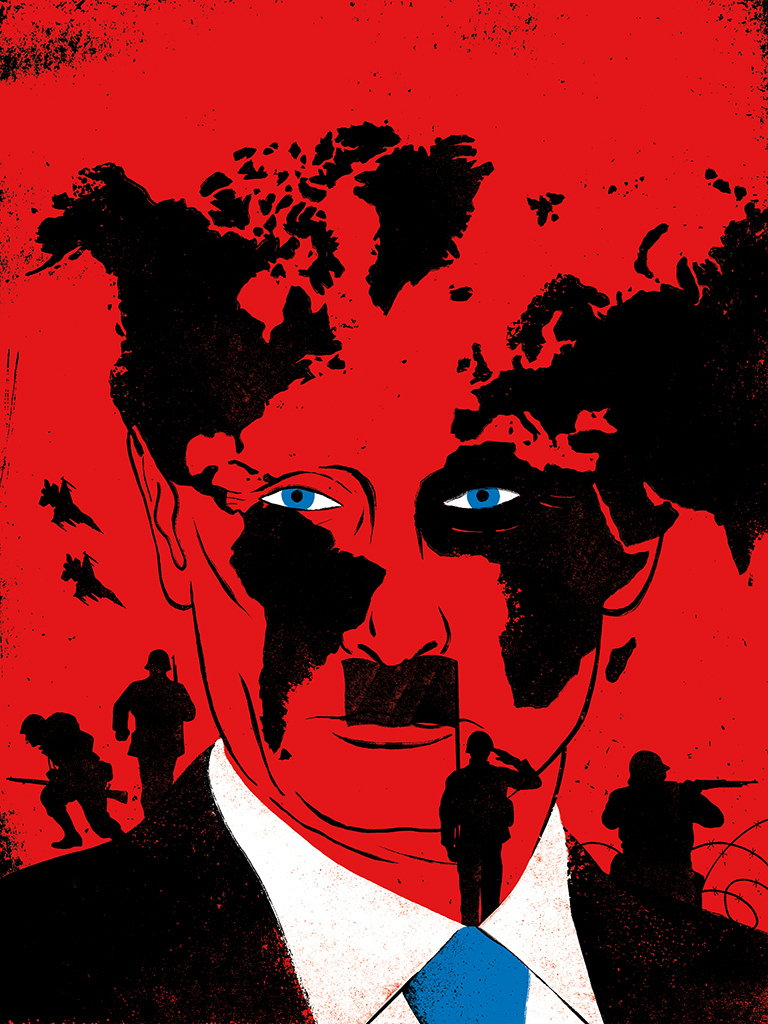


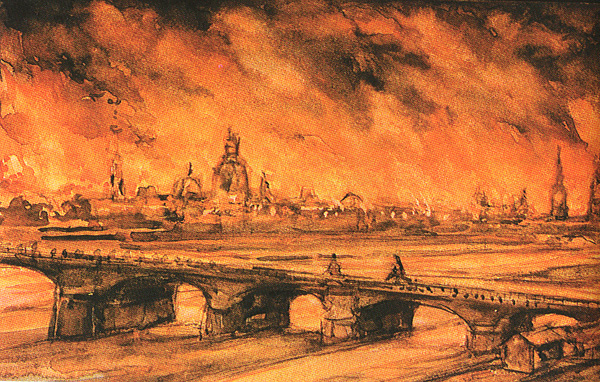
 What's Left